Mohammed Lamine Lebbou Appointed as Bank of Algeria Governor, Replacing Salah Eddine Taleb
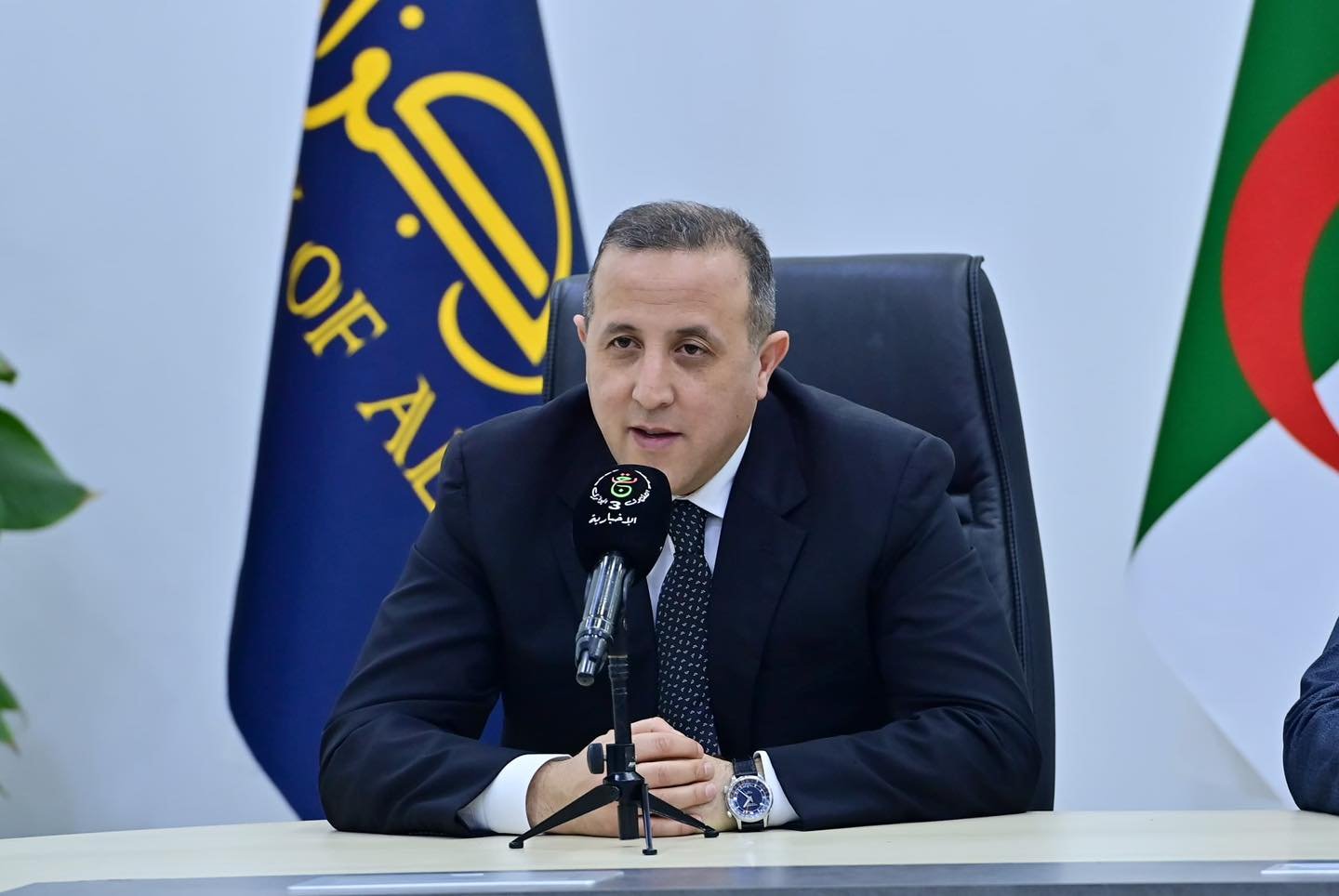
Image: Algerie Eco
Takeaway
Lebbou's appointment signals a potential shift in Algeria's monetary policy, requiring international investors to reassess their risk exposure. Investors should closely monitor the new governor's approach to managing the DZD/USD exchange rate and controlling inflation, as these factors will directly impact the profitability of investments in Algeria's non-hydrocarbon sectors. Companies with significant DZD-denominated assets should hedge against potential currency volatility.
Mohammed Lamine Lebbou was installed as the new Governor of the Bank of Algeria on Wednesday, February 25, 2026, in a ceremony presided over by Prime Minister Sifi Ghrieb in Algiers. The appointment, made by President Abdelmadjid Tebboune on Monday, February 23, 2026, follows the dismissal of Salah Eddine Taleb on January 4, 2026. Mouatassem Boudiaf served as the interim governor between Taleb's departure and Lebbou's appointment. The installation ceremony was attended by Finance Minister Abdelkrim Bouzred, former acting Governor Mouatassem Boudiaf, and directors of financial institutions.
Lebbou's appointment comes at a crucial time as Algeria focuses on economic diversification and managing monetary policy. The government is aiming to reduce its budget deficit by 35.5% to $40 billion in 2026, which is equivalent to 12.4% of GDP. This will be achieved through expansion in non-hydrocarbon sectors and stronger domestic investment. The Bank of Algeria is expected to consolidate the stability of the dinar, manage inflationary pressures, and support the country's economic diversification ambitions.
Prior to this role, the 48-year-old Lebbou was the Chief Executive Officer of BEA International Bank, the French subsidiary of Banque Extérieure d'Algérie. His career includes a range of senior positions, including CEO of Icosia Capital, Chairman of Algerian Qatari Steel (AQS) from 2020 to 2021, and head of the National Bank of Algeria (BNA) from 2021 to 2024. He also held positions at the Algerian Foreign Trade Bank in Switzerland and ABS Bank in Senegal. Lebbou holds a bachelor's degree in management sciences from Badji Mokhtar University in Annaba, as well as a master's degree in industrial economics and a postgraduate diploma in economic analysis of organizations from Lumière Lyon 2 University in France.
The new governor faces the task of aligning monetary policy with the government's growth agenda, especially as Algeria seeks investment in energy, infrastructure, and manufacturing. Careful coordination between fiscal and monetary authorities will be essential to avoid inflationary pressures or liquidity shocks. The government's focus on a strong social contract and public investment in infrastructure is expected to continue.
Looking ahead, markets and investors will be closely watching Lebbou's early signals regarding currency management, credit policy, and transparency. Key indicators to monitor include the non-hydrocarbon primary balance (NHPB) published quarterly in USD, mandatory e-invoicing with automatic VAT withholding, and the establishment of a functioning domestic yield curve with quarterly monetary reporting. The IMF expects Algeria's inflation rate to decline from 4% to 2.8% in 2025, supported by stable pricing conditions and effective monetary policy measures.