China to Eliminate Tariffs on Imports From 53 African Nations Starting May 2026
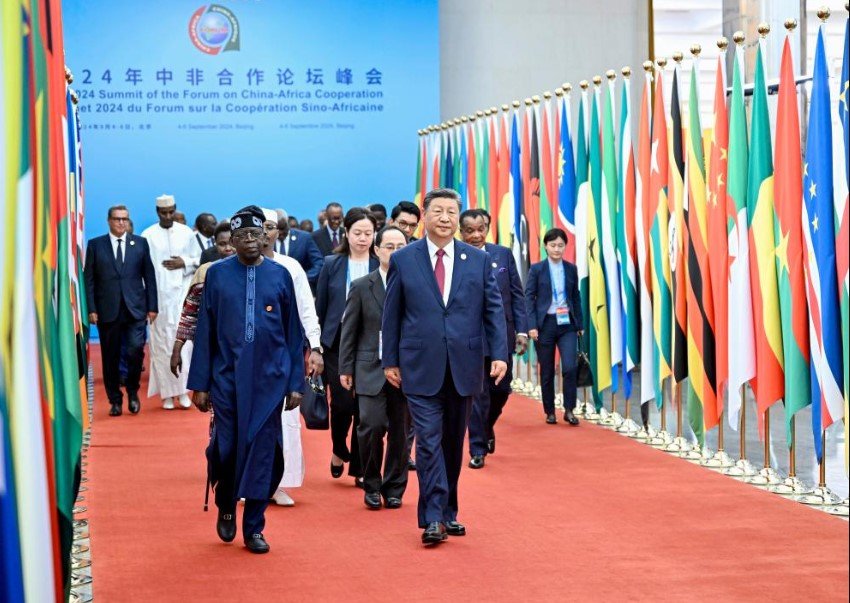
Image: Algerie Eco
Takeaway
The elimination of tariffs on imports from 53 African nations by China, effective May 2026, presents a significant opportunity for international investors and fund managers. Companies involved in exporting goods from Africa to China should assess their supply chains and production capacities to capitalize on the increased market access and potential for higher sales volumes.
Chinese President Xi Jinping announced that tariffs would be eliminated on imports from 53 African countries, effective May 1, 2026. The zero-tariff treatment applies to African nations that maintain diplomatic relations with China, excluding Eswatini. The announcement was made on Saturday, February 14, 2026, during the 39th summit of the African Union in Addis Ababa.
China's move to eliminate tariffs for most African nations comes amid uncertainty surrounding the renewal of the United States' African Growth and Opportunity Act (AGOA) and ongoing trade tensions between African nations and the European Union over Economic Partnership Agreements. China surpassed the US in 2009 to become Africa's largest trading partner. Bilateral trade agreements have been signed between China and 40 countries on the continent. In 2000, China-Africa trade amounted to $10 billion, growing to $220 billion by 2014. By 2023, total trade reached $282.1 billion.
China's trade policies aim to balance globalization through trade liberalization with the protection of national industries through strategic state intervention. China's current Five-Year Plan (2021–2025) emphasizes “dual circulation,” boosting domestic consumption while maintaining international trade. The Belt and Road Initiative (BRI), launched in 2013, is a cornerstone of China's global trade strategy, investing in infrastructure and connectivity across Asia, Africa, and Europe. China is also promoting “green trade” policies to support low-carbon industries and integrating digital platforms to streamline customs and e-commerce.
Trade between China and Africa reached $222.05 billion between January and August 2025, a 15.4% year-on-year increase. Chinese exports to Africa surged 24.7% to $140.79 billion, while imports from Africa rose just 2.3% to $81.25 billion. Africa's trade deficit with China widened to $59.55 billion in the first eight months of 2025, nearly matching the full-year 2024 deficit of $61.93 billion. China's Ministry of Foreign Affairs stated that this initiative supports African export growth and aligns strategically with its global partners. China also intends to negotiate and sign joint economic partnership agreements with African countries and upgrade its “green channel” to expand market access for African exports.
Starting May 1, 2026, investors should monitor the specific goods and sectors that experience the most significant tariff reductions and resulting trade volume increases. China will collaborate with Africa to support the African Union's Agenda 2063, focusing on modernization and sustainable development. China is ready to expand zero-tariff treatment to all 53 African countries having diplomatic relations, except Eswatini, to welcome quality products from Africa to the Chinese market. The measures are expected to cover market access, inspection and quarantine procedures, and customs clearance to boost trade in goods, enhance skills and technical training, and expand the promotion of quality African products.