China's Geely to Build Africa's First Satellite Factory in Algeria
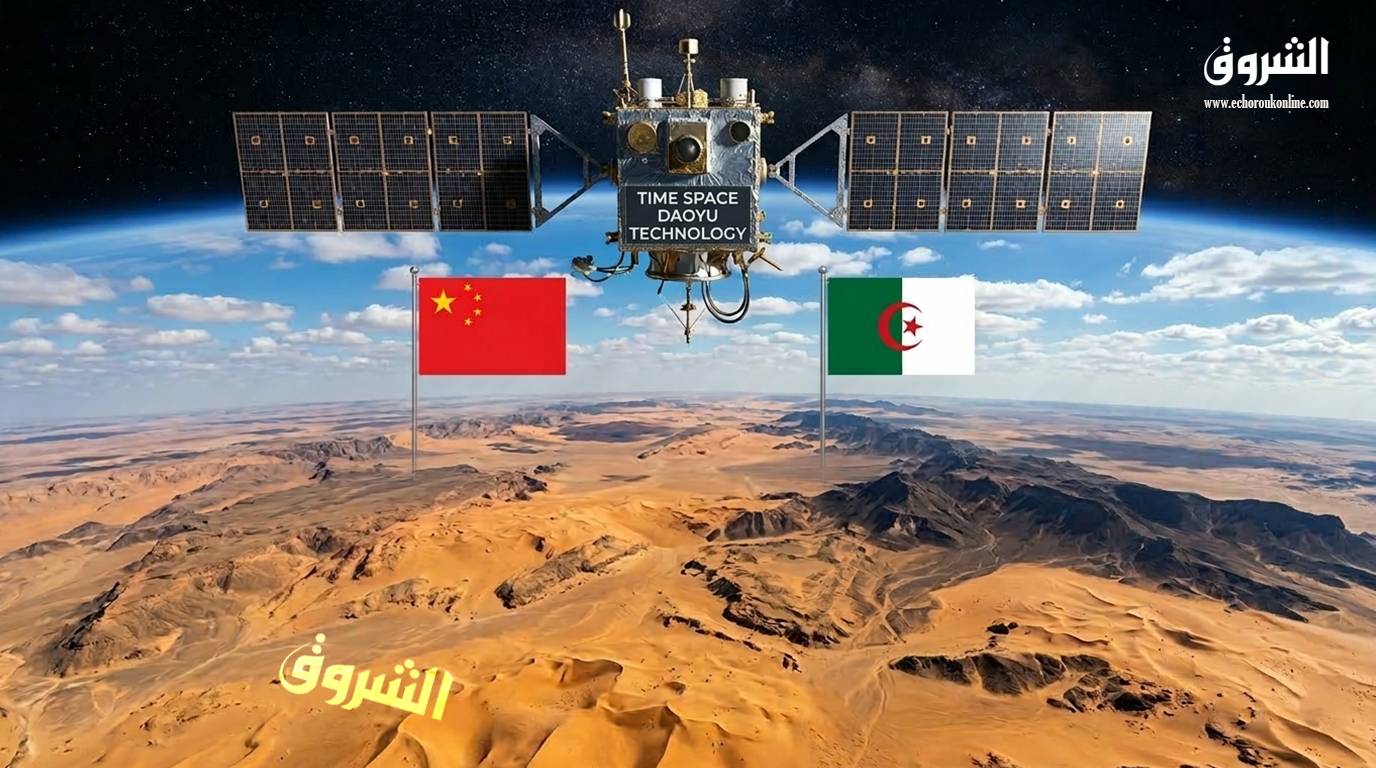
Image: Echorouk
Takeaway
Geely's move into Algeria's space sector reflects a broader trend of automotive companies diversifying into technology and connectivity. Investors should monitor Geely's partnerships with Algerian and Moroccan entities, as successful implementation could create new revenue streams in satellite manufacturing, IoT services, and data analytics. The development of a local satellite industry could also reduce Algeria's reliance on foreign technology providers.
Zhejiang Geely Holding Group, the Chinese automotive giant and parent company of Geely Auto, is expanding into Africa's space industry by launching satellite projects in Algeria. Through its aerospace arm, Time Space Daoyu Technology Co., Ltd., Geely is working with Algeria to develop its domestic satellite industry and boost technological innovation. Geely's subsidiary Geespace signed agreements with the Algerian Space Agency (ASAL) and Algérie Télécom Satellite (ATS) in December 2025 to establish a satellite manufacturing plant and a research and application center in Algeria.
This initiative aligns with Algeria's strategic push to enhance its technological capabilities and space sovereignty. The Algerian Space Agency (ASAL), established on January 16, 2002, in Algiers, is in charge of the Algerian space program. ASAL's National Space Program (PSN) aims to utilize space technologies for economic, social, cultural development, national security, and environmental monitoring. The PSN's Horizon 2020 framework focused on satellite development, technology transfer, and capacity building, including the inauguration of the Algerian Center for Satellite Development (CDS) on February 23, 2012. Algeria has already launched six satellites, including Alsat-1 in November 2002 and Alsat-2A in 2010.
The project includes building Africa's first satellite manufacturing facility, signaling Algeria's ambition to design and produce its own space technologies. The satellite research and application center will serve as a hub for Algerian engineers, scientists, and technology companies to develop new satellite technologies and maintain equipment. This integrated approach aims to enable Algeria to design and produce satellites tailored to its specific national needs, such as telecommunications coverage, agricultural monitoring, and disaster prevention. The Algerian Space Agency (ASAL) also has agreements with global space partners, including China, the European Space Agency (ESA), and the French National Centre for Space Studies (CNES).
Algeria aims to strengthen its position in the global race for data control, communications infrastructure, and advanced technological capabilities. The manufacturing plant and research center will support the production of low-Earth orbit satellites and the deployment of satellite-based Internet of Things (IoT) services. This collaboration allows Algeria to position itself as a leader in Africa's space sector. Geely's expansion into Africa's space industry also includes a partnership with Morocco, where its subsidiary Geespace is working with Soremar Group to commercialize its GEESATCOM satellite connectivity platform.
Looking ahead, the key will be the operational conditions for satellite production and the integration of the new infrastructure into Algeria's existing telecommunications and space systems. The project aligns with Algeria's efforts to expand its space program, demonstrated by the recent launches of the Alsat-3A and Alsat-3B satellites earlier in 2026. If successful, the Geely satellite factory could position Algeria as a key hub for satellite manufacturing and space innovation in Africa, opening doors to new industrial partnerships and technological opportunities across the continent.