Algeria Tackles Bureaucracy to Spur Economic Growth, Diversify Agriculture
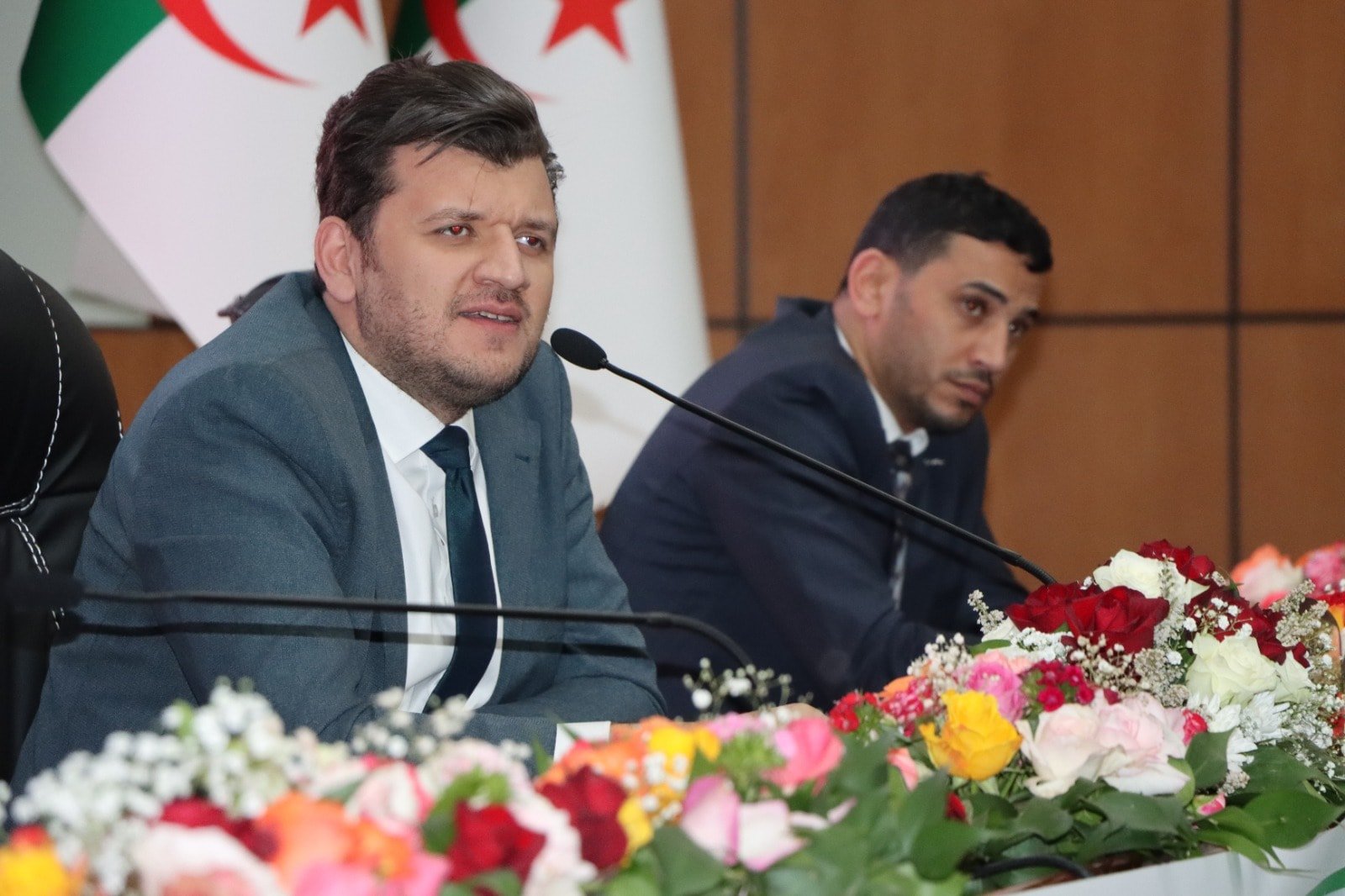
Image: Algerie Eco
Takeaway
Minister Oualid's statement signals a renewed focus on operational efficiency within Algeria's agricultural sector. International agribusinesses and investors should monitor the simplification of administrative procedures and the expansion of irrigation infrastructure. These improvements could unlock new opportunities for investment in climate-smart agriculture and value-added processing, potentially increasing returns and reducing operational risks.
Algeria is intensifying its efforts to dismantle bureaucratic obstacles hindering economic progress, particularly within the crucial agricultural sector, as highlighted by Minister of Agriculture, Rural Development, and Fisheries, Yacine Oualid. On March 4, 2026, Oualid emphasized via social media that building a robust economy is impossible with a "come back tomorrow" mentality, directly addressing the administrative hurdles faced by farmers and investors. This declaration underscores the government's commitment to overhauling outdated systems and fostering a more efficient business environment to attract both domestic and foreign investment.
President Abdelmadjid Tebboune's administration has been actively pursuing economic reforms to diversify the Algerian economy, which remains heavily reliant on hydrocarbons. The reforms aim to simplify business registration, reduce bureaucracy, improve transparency, and strengthen the rule of law. The government approved a record $135 billion budget for 2026 (~DZD 18.2 trillion), a significant increase from the $65 billion budget in 2021 (~DZD 8.8 trillion), signaling a strong commitment to public spending on infrastructure, public sector wages, and subsidies. While a budget deficit of approximately $40 billion (~DZD 5.4 trillion), or 12.4% of GDP, is projected for 2026, this represents a 35.5% reduction compared to the $62 billion (~DZD 8.4 trillion) deficit in 2025, reflecting efforts to balance fiscal prudence with economic stimulus.
Agriculture is a key sector for diversification, employing 2.6 million people, representing 20% of the working population, and contributing $35 billion (~DZD 4.7 trillion), or 18% of GDP. However, the sector faces significant challenges, including water scarcity, climate variability, soil degradation, and limited access to credit for smallholders. Currently, only 12%-13% of arable land is irrigated, but the government aims to increase this to 25% through an $800 million (~DZD 108 billion) investment in enhanced water management systems. To address water scarcity, six large seawater desalination plants, each with a capacity of 300,000 m³, are planned for the wilayas of Skikda, Jijel, Tizi Ouzou, Chlef, Mostaganem and Tlemcen.
Streamlining bureaucratic processes is expected to benefit farmers, investors, and the broader economy by reducing delays and fostering a more predictable regulatory environment. Specific sectors like construction, domestic demand, employment, and intermediate consumption (cement, steel, transport, services) are expected to receive a boost from the accelerated implementation of structural economic projects. International investors, particularly those interested in agriculture and related industries, stand to gain from improved transparency and efficiency.
Looking ahead, the success of Algeria's economic reforms hinges on disciplined implementation and stable global energy prices. Key indicators to watch include the progress of desalination projects, the expansion of irrigated land, and the performance of non-hydrocarbon sectors. The government projects economic growth of 4.1% in 2026, slightly lower than the 4.5% expected in 2025, assuming an average oil price of $60 per barrel. The 2026 Finance Law, with commitment authorizations of DZD 16,861.5 billion (~$124.9 billion) and payment appropriations of DZD 17,636.7 billion (~$130.6 billion), will be crucial in driving this growth and ensuring the effective execution of planned projects.