Algeria Launches In Salah Water Demineralization Project to Boost Supply
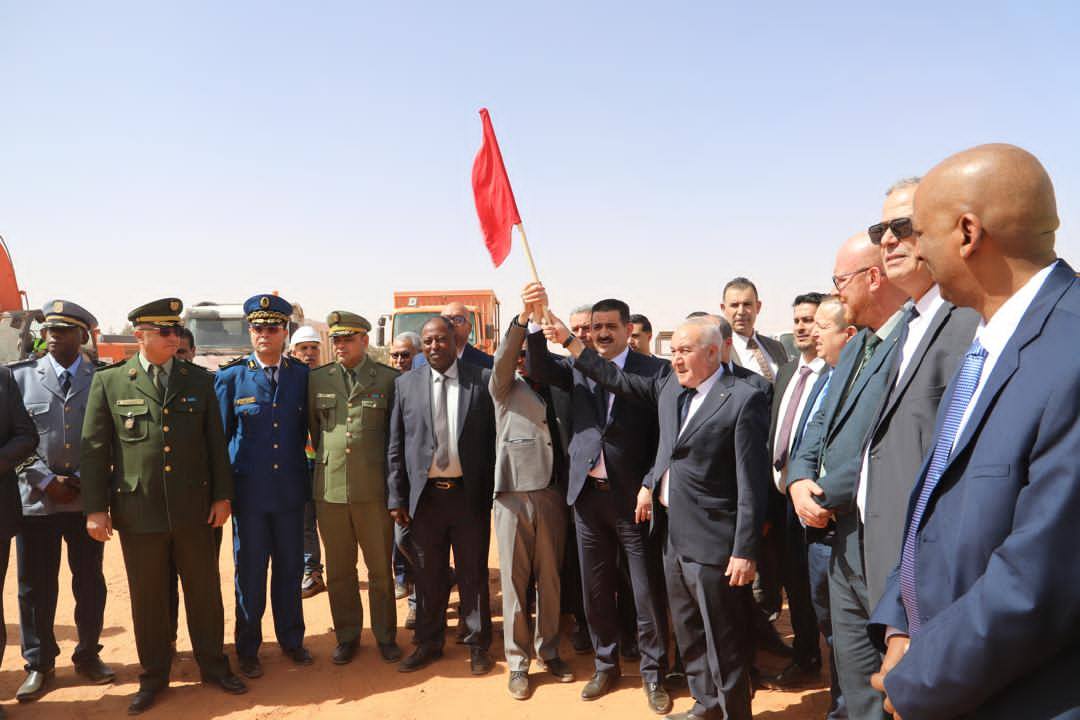
Image: Echorouk
Takeaway
The In Salah project, along with Algeria's broader desalination push, signals a long-term commitment to water security that will reshape regional economics. Investors should monitor companies involved in desalination technology and infrastructure, as well as agricultural businesses that will benefit from more reliable water supplies. This focus on water independence could reduce Algeria's reliance on imports and create new export opportunities.
Minister of Water Resources Taha Derbal inaugurated a project to build a water demineralization plant in In Salah on Thursday, February 26, 2026. The new facility will have a production capacity of 60,000 cubic meters per day. The project aims to improve the quality of drinking water in the region by supplementing the existing In Salah-Tamanrasset water transfer system.
Algeria is aggressively pursuing desalination to combat water scarcity, especially in the southern provinces. President Abdelmadjid Tebboune has directed the launch of two desalination plants in Tamanrasset and Tindouf in March as part of a broader plan to address climate change effects and meet the needs of the population. By the end of 2025, Algeria had commissioned five large desalination plants, each with a capacity of 300,000 m³/day, bringing the total operational units to 19. These efforts align with a national program aiming to increase desalinated water production to 5.6 million cubic meters per day by 2030.
Nationwide, Algeria had approximately 20 desalination plants at the start of the decade, producing 2.1 to 2.2 million cubic meters of desalinated water per day, covering about 17% of the nation's potable water consumption. By the end of 2025, production reached approximately 3.7 million m³/day, covering about 42% of potable water needs for a population estimated around 47 million people. The ten-year plan aims to reach 5.6 to 5.8 million m³/day by 2030, which would increase desalination's share to around 60% of national potable water demand. The cost of producing one cubic meter of desalinated water is less than 0.5 euros.
The In Salah project will directly benefit the local population by improving access to quality drinking water. The project complements the existing In Salah-Tamanrasset water supply project, which includes a 545km water delivery pipeline. The original project, costing $850 million, has a water supply capacity of 100,000m³/day. The In Salah-Tamanrasset system relies on 24 boreholes and six pumping stations to transport water across the desert.
Looking ahead, Algeria plans to continue expanding its desalination capacity with mobile containerized plants adapted to desalinate saline groundwater in several southern regions. The government is also reviewing presidential directives focused on local development, food and water security, and employment. Investors should monitor the progress of these projects and the potential impact on water-intensive industries such as agriculture and manufacturing. The expansion of desalination capacity may also create opportunities for technology providers and engineering firms specializing in water treatment solutions.