Brent Crude Surges Past $90 Amid Middle East Conflict, Raising Global Inflation Fears
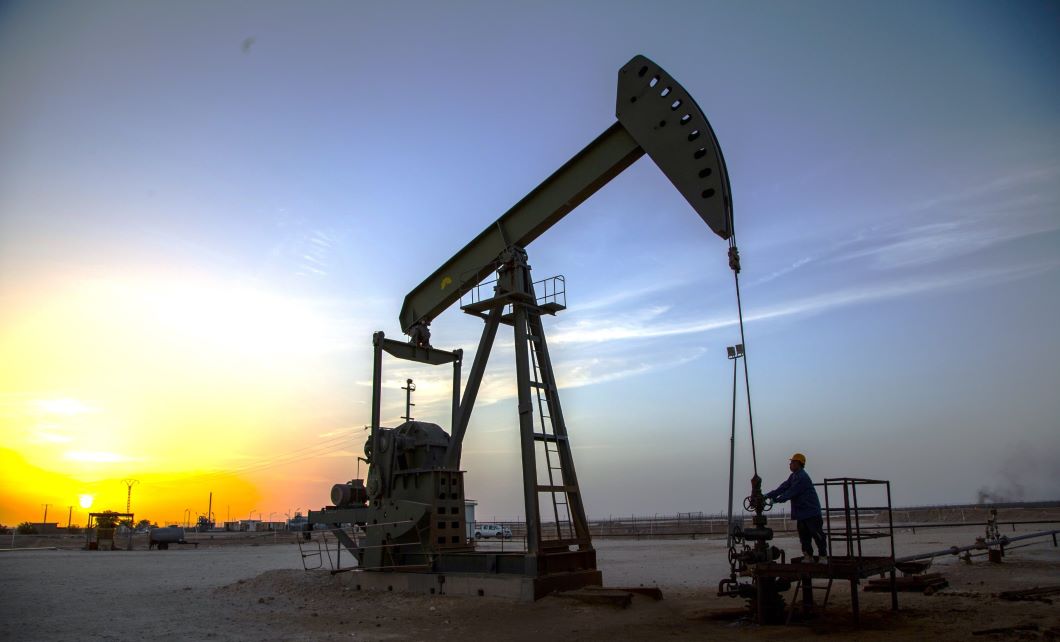
Image: Algerie Eco
Takeaway
The spike in Brent crude to over $90 presents both opportunities and risks for energy investors. Companies with exposure to Algerian oil and gas production, such as Sonatrach, may see increased revenues in the short term. However, prolonged disruptions and higher energy prices could negatively impact global economic growth, potentially offsetting these gains. Investors should closely monitor geopolitical developments and their impact on supply chains, particularly in the Strait of Hormuz, as well as the responses from OPEC+ and major consuming nations.
Oil prices have soared to levels not seen since 2024, driven by escalating tensions in the Middle East and disruptions to crucial oil supply routes. On Friday, March 7, 2026, Brent crude, the international benchmark, closed at $92.69 per barrel, marking an 8% increase compared to the previous day. The surge is attributed to investor concerns over the paralysis of hydrocarbon flows from the Gulf, particularly the Strait of Hormuz, a critical transit point for approximately 20% of the world's oil supply. The American Automobile Association (AAA) reported that the average price of regular gasoline in the United States jumped to $3.25 per gallon, the highest in 11 months, with a 9% increase in just one week.
The ongoing conflict, triggered by US-Israeli strikes against Iran on February 28, 2026, has disrupted shipping and prompted major producers to cut output. The Strait of Hormuz remains a key chokepoint, and its continued disruption could lead to sustained higher oil and natural gas prices, negatively impacting global growth and inflation. Kristalina Georgieva, the International Monetary Fund (IMF) managing director, stated on Friday that a persistent 10% increase in energy prices could push global inflation up by 40 basis points and slow global economic growth by 0.1-0.2%. Prior to the conflict, J.P. Morgan Global Research anticipated Brent crude averaging around $60/bbl in 2026, but geopolitical risks now present a significant wildcard.
Algeria, a member of OPEC since 1969, produced approximately 900,000 barrels of oil per day as of 2024, in line with its OPEC+ production target. The country holds an estimated 12.2 billion barrels of proven crude oil reserves as of early 2023, producing high-quality, light, sweet crude oil with very low sulfur content, primarily the Sahara blend from Hassi Messaoud. Algeria aims to increase its natural gas production from the current 137 billion cubic meters (Bcm) to 200 Bcm per year in the short to medium term. While Algeria's oil production is set to increase by 6,000 barrels per day starting in April, bringing its total output to 977,000 barrels per day, the broader impact of the Middle East crisis overshadows these incremental gains.
The surge in oil prices is expected to have varied implications across the globe. Countries heavily reliant on energy imports, such as India and China, face increased energy costs, wider trade deficits, and intensified inflationary pressures. In the United States, rising gasoline prices are politically sensitive, potentially complicating the Federal Reserve's monetary policy path. Europe, which imports nearly all of its oil and a significant share of its LNG, could face an energy shock reminiscent of the 2021-2023 energy crisis. Ports in Bahrain, Kuwait, Qatar, Saudi Arabia and the United Arab Emirates have recorded significant falls in tanker movements, especially for oil and liquefied natural gas (LNG).
Market participants are closely monitoring the situation in the Strait of Hormuz and the potential for further escalation. A prolonged closure could push oil prices above $100 per barrel, potentially leading to stagflation. The next OPEC+ ministerial meeting, scheduled for April 5th, will be crucial in determining the group's response to the evolving market dynamics. Investors should also watch for any signs of resolution or de-escalation in the Middle East conflict, as well as alternative supply routes and OPEC's capacity to compensate for disruptions.