Algerian Qatar Steel Exports 15,575 Tonnes of Rebar to Lithuania via Annaba Port
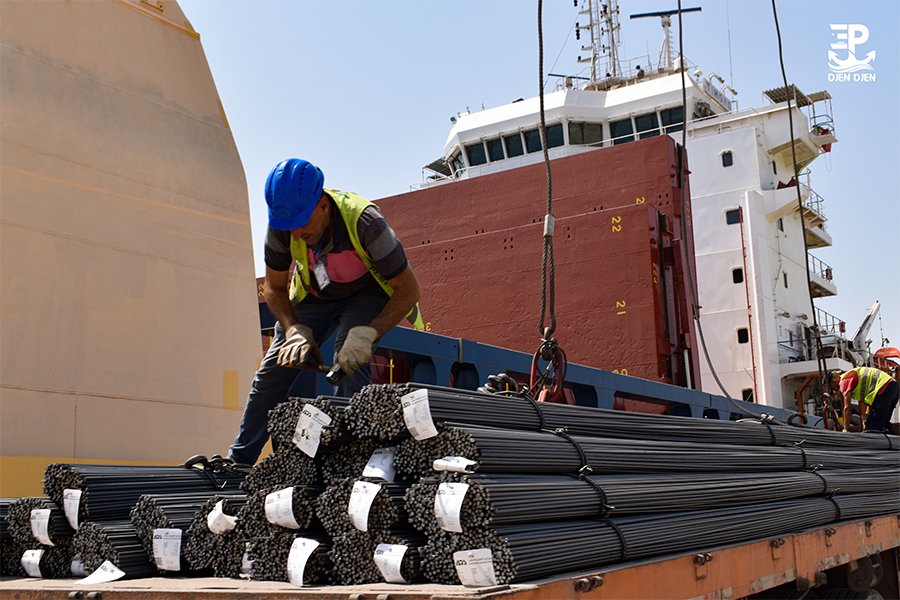
Image: Algerie Eco
Takeaway
The shipment of 15,575 tonnes of rebar to Lithuania signals growing export capacity for Algerian steel producers like AQS. Investors should monitor AQS's production volumes and expansion plans, as well as infrastructure developments at the Port of Annaba, to gauge Algeria's potential as a regional steel exporter. Increased steel exports could reduce Algeria's reliance on hydrocarbon revenues, making the country's economy more resilient to oil price fluctuations.
The Port of Annaba loaded over 15,000 tonnes of reinforcing steel (rebar) onto the vessel "Nassauborg" for export to Lithuania on March 7, 2026. The shipment, totaling 15,575 tonnes, was produced by Algerian Qatar Steel (AQS) and loaded at dock number 7. The port authority of Annaba confirmed the operation, highlighting its role in supporting Algeria's non-hydrocarbon export strategy.
This export operation aligns with the Algerian government's objective to boost activity in national ports and support economic operators engaged in exporting non-hydrocarbon products. Ali Boulaârès, Director General of the Port of Annaba, emphasized that the port mobilized all necessary logistical and organizational resources to ensure smooth loading operations, in coordination with various port stakeholders, including handling services, port authorities, customs, and logistics operators. Algeria is actively pursuing a strategy to diversify its external revenues by encouraging non-hydrocarbon exports, which have exceeded $7 billion in recent years, compared to approximately $2 billion a decade ago.
AQS, a joint venture established in December 2013 between Qatar Steel International (49%), SIDER Investment Group (46%), and the Algerian National Investment Fund (5%), has a production capacity of over two million tonnes of steel per year at its plant in Jijel. This enables the company to supply both the domestic construction market and export to Europe and other markets. AQS has 2,500 employees. The company’s first product was produced by the Direct Reduction Plant (DRP) in February 2021, and by March 2022, AQS was operating at 9% over its design capacity.
The export of this large volume of steel underscores the growing capabilities of Algerian ports, particularly Annaba, in handling large-scale loading operations. It also demonstrates the increasing presence of Algerian steel products in international markets, particularly in Europe, where there is growing demand. The port of Annaba handled nearly 8 million tonnes of traffic in 2025, including over 6 million tonnes of non-hydrocarbon exports such as phosphate, ammonia, cement, and steel products. This represented a 6% increase in the first quarter of 2025, with continued growth throughout the year.
Looking ahead, expansion works are underway at the Port of Annaba, including a new mineral quay with a capacity of 7 to 10 million tonnes per year for phosphate, to further enhance the port's strategic capabilities. These developments are crucial as Algeria aims to reduce its budget deficit, projected at nearly $40 billion (~DZD 5.4 trillion) in 2026, by expanding its mining and other sectors. Algeria inaugurated a 950-kilometer railway in February 2026 to connect the Gara Djebilet mine to industrial hubs and ports, facilitating iron ore exports. Government projections indicate that iron ore production will gradually increase to reach 40-50 million tonnes annually by 2040.