Algeria to Launch Trans-Saharan Gas Pipeline Construction After Ramadan, Strengthening Hub Position
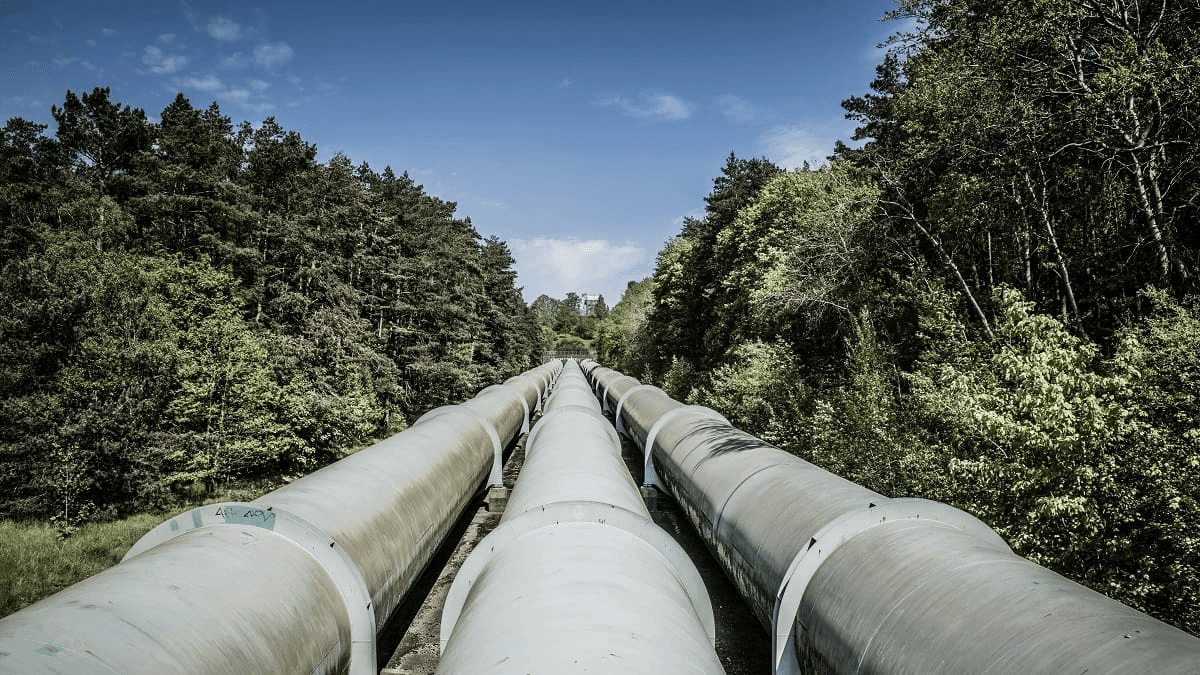
Image: TSA
Takeaway
The Trans-Saharan Gas Pipeline represents a strategic opportunity for European utilities to diversify their gas supply and reduce reliance on single-source providers. Investors should monitor Sonatrach's project management and construction progress, as delays could impact European gas prices and supply availability. Companies specializing in pipeline construction, gas compression technology, and corrosion solutions should explore potential business opportunities related to the TSGP.
Algerian President Abdelmadjid Tebboune announced on February 16, 2026, that construction of the Trans-Saharan Gas Pipeline (TSGP) will commence immediately after Ramadan, solidifying Algeria's role as a key gas hub between Africa and Europe. The 4,128-kilometer pipeline, a $13 billion project, will transport 30 billion cubic meters of natural gas annually from Nigeria's Warri region, through Niger, to Algeria's Hassi R'Mel hub. Sonatrach, the Algerian state-owned oil company, will manage the pipeline's installation across Niger.
The TSGP, also known as the NIGAL pipeline and Trans-African gas pipeline, aims to connect West African gas reserves directly to Mediterranean export terminals. The pipeline will connect to existing infrastructure at Hassi R'Mel, including the Trans-Mediterranean, Maghreb-Europe, Medgaz, and Galsi pipelines, facilitating gas supply to Europe from Algeria's Mediterranean coast. Agreements to accelerate the project were signed by Algeria, Nigeria, and Niger in February 2025, covering feasibility studies, financing, and confidentiality. The project was initially conceived in the 1970s, with various agreements reached in the early 2000s before stalling.
The pipeline's construction will be divided into phases, with authorization scheduled for late March 2026 after Ramadan. Phase 1 (2026-2028) will focus on foundation work and major pipeline segments, followed by compression stations and technical systems in Phase 2 (2028-2030). Testing, commissioning, and operational launch are planned for Phase 3 (2030-2032), with system optimization and capacity expansion in Phase 4 (2032 onwards). The pipeline will have a diameter of 48 to 56 inches (1,220 to 1,420 mm). The project requires specialized engineering to withstand extreme temperature variations and sand dune navigation, using advanced anti-corrosion materials.
The project is structured as a trilateral partnership, with Nigeria's NNPC and Algeria's Sonatrach holding 90% of shares, and Niger holding the remaining 10% through SONIDEP. Nigeria's 1,037-kilometer section represents approximately $4.2 billion in construction investment. Niger stands to benefit from transit fees and direct gas sales participation. The TSGP is part of a broader wave of regional gas infrastructure initiatives, including the $25 billion Nigeria-Morocco Gas Pipeline.
Construction authorization is scheduled for late March 2026, with Sonatrach leading the construction and coordinating technical standards. The pipeline's annual throughput capacity of 30 billion cubic meters could represent 8-10% of total European gas imports. Future upgrades could increase throughput to 35-40 billion cubic meters annually. The project's success hinges on maintaining stable diplomatic relationships between participating countries, with international financing dependent on regional stability.