Algeria Ranks Second in Gas Supply to Spain, Eyes Larger European Role
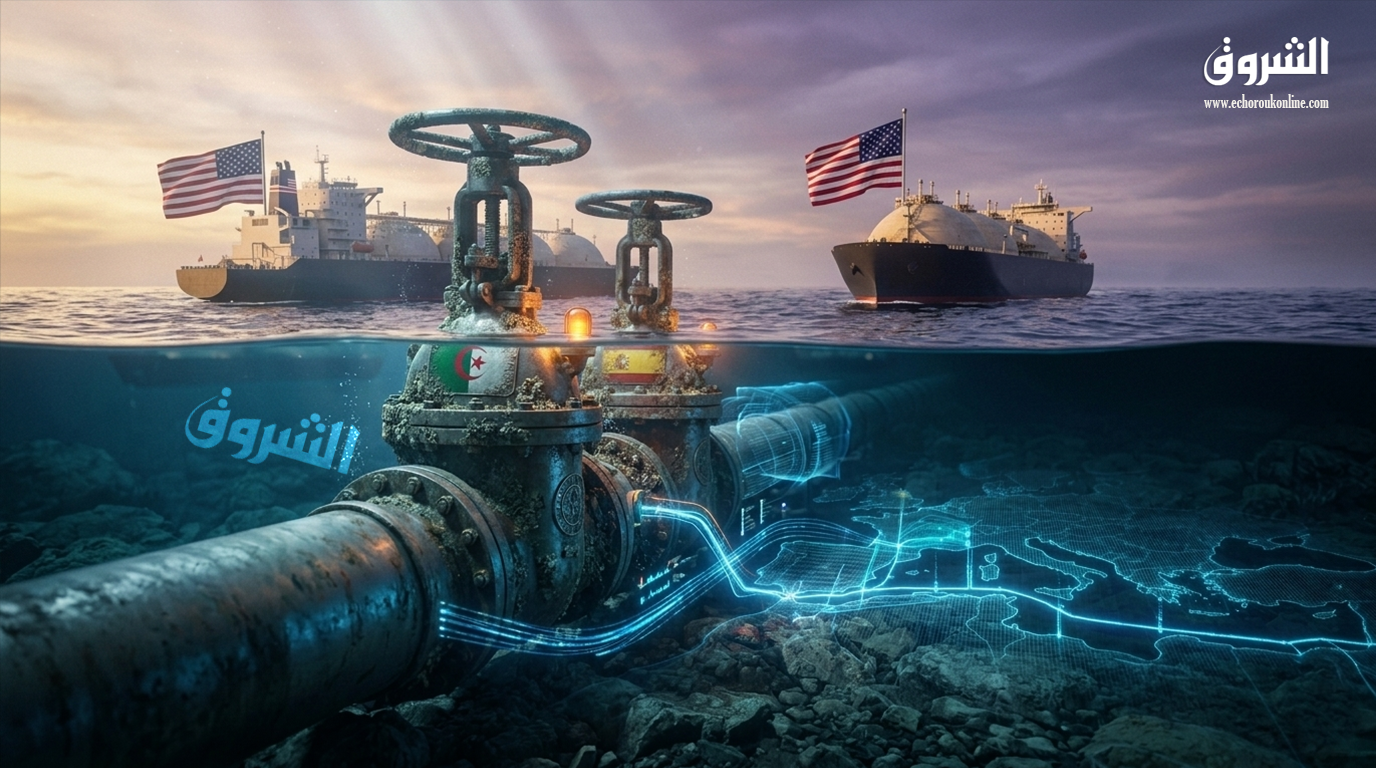
Image: Echorouk
Takeaway
The 50% year-on-year increase in Algerian LNG to Italy reflects a structural shift in Mediterranean energy flows, not a seasonal spike. European utilities and LNG traders should monitor Medlink and the Southern Hydrogen Corridor. Algeria's growing commitment to Italian volumes may tighten spot supply for other Mediterranean buyers.
In January 2026, Algeria emerged as the second-largest supplier of natural gas to Spain, providing 29.4% of Spain's total gas imports via the Medgaz pipeline. The United States led gas exports to Spain with a 44.5% share. This development underscores Algeria's increasing importance as a reliable energy partner for Europe, particularly as the continent seeks to diversify its gas sources amidst geopolitical tensions.
Algeria and Libya have emerged as reliable alternatives to compensate for some of the natural gas supplies to Europe, especially given supply disruptions from Qatar due to geopolitical tensions in the Middle East. Italy, for example, has begun to increasingly turn to African gas to offset potential shortages in the European market. Algeria possesses substantial conventional natural gas reserves, with OPEC data reporting 4.5 trillion cubic meters (159 trillion cubic feet) in 2024, representing 2.15% of global reserves. This ranks Algeria 10th worldwide. In 2025, European markets received approximately 95% of Algeria's total LNG exports, with Turkey topping the list of importers at 3.14 million tons, followed by France, Italy, Spain, and the United Kingdom.
Algeria is actively working to increase its gas production and export capacity. Sonatrach, the state-owned energy giant, has launched a $2.33 billion project focused on the Hassi Rmel field to counteract the natural decline in production from existing wells and maintain a steady flow. The project, called Phase III Boosting, Stage 2, involves constructing new compression stations and upgrading the gas collection network, with facilities slated to come online in stages starting in late 2026 and continuing into 2027. The goal is to recover an additional 121 billion cubic meters of dry gas, along with significant amounts of condensate and liquefied petroleum gas (LPG). The capacity of the Medgaz pipeline, which delivers natural gas to Spain, increased from 283 billion cubic feet per year (Bcf/y) to 378 Bcf/y at the end of 2021 after a third turbo compressor was put into service.
Algeria is also planning to begin construction of the 30 billion cubic meters per year trans-Saharan gas pipeline in 2026, which will connect Nigerian fields to Algerian territory before transporting gas to Europe via existing infrastructure like the Transmed pipeline to Italy and the Medgaz pipeline to Spain. Sonatrach, with Chinese partners, is conducting an inspection and modernization program for approximately 3,576 kilometers of pipelines to strengthen flows through the Medgaz pipeline to Spain and the Transmed corridor to Italy. The EU has exempted Algerian LNG shipments from pre-audit procedures, placing Algeria in a "trust circle" with the United States and Qatar. In 2024, Algeria supplied 39.2 Bcm of gas to the EU, making up some 14.4% of EU imports.
Looking ahead, Algeria aims to increase its natural gas production from the current 137 billion cubic meters (Bcm) to 200 Bcm per year in the short to medium term. New compressor stations in Hassi R'Mel will gradually come online starting in late 2026, increasing pipeline pressure and export capacity. The National Agency for the Development of Hydrocarbon Resources (ALNAFT) is preparing a new licensing round for 2026, focusing on frontier areas and unconventional resources, including potential shale gas. The government has set a target of 40 terawatt-hours of hydrogen and derivatives annually by 2040, with an initial 50-megawatt semi-industrial project under development in Arzew.