Algeria Launches Arzew Naphtha Reforming Unit to Boost Gasoline Production
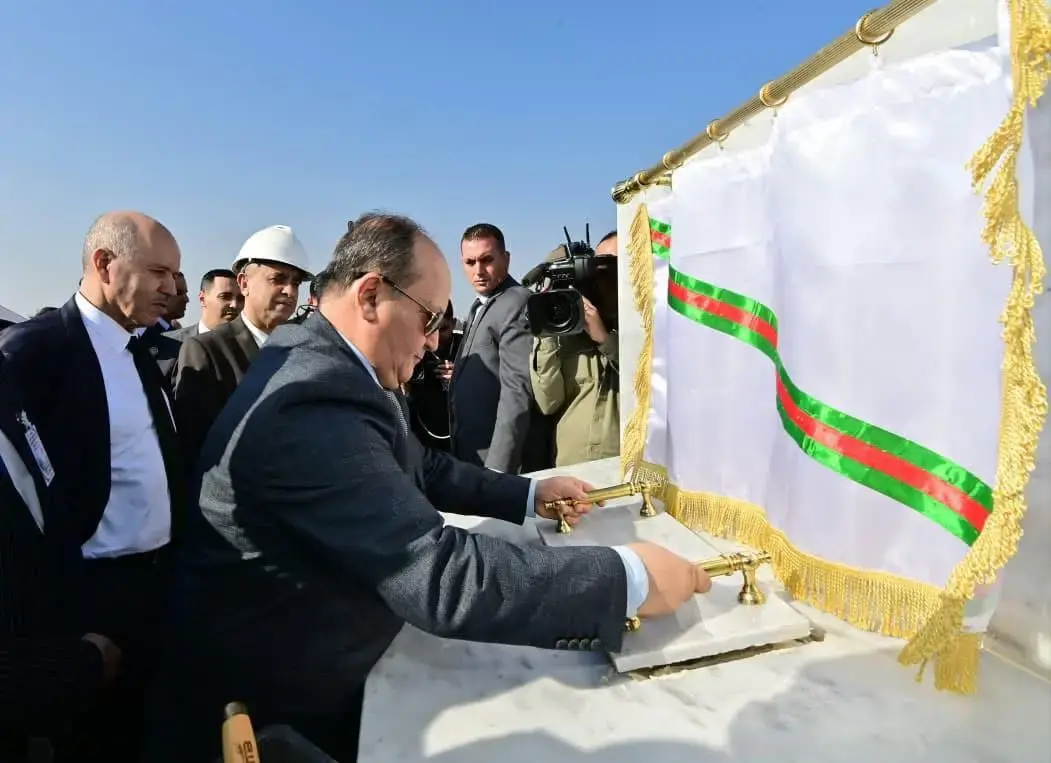
Image: Algerie Eco
Takeaway
The investment in Arzew's refining capacity signals Sonatrach's commitment to meeting rising domestic gasoline demand and potentially expanding into regional export markets. Energy traders should monitor gasoline price differentials between Algeria and neighboring countries, as increased Arzew production could shift trade flows and compress margins for importers. Companies involved in refinery construction and catalyst supply stand to benefit from Algeria's continued investment in upgrading its hydrocarbon infrastructure.
Prime Minister Sifi Ghrieb laid the foundation stone for a new naphtha catalytic reforming unit at the Arzew oil refinery in Oran on Tuesday, February 24, 2026. The project, situated in the Arzew industrial zone, marks the double anniversary of the creation of the General Union of Algerian Workers (UGTA) and the nationalization of hydrocarbons. The new Continuous Catalytic Reforming (CCR) unit aims to upgrade naphtha produced at the refinery to manufacture reformate, a key component in gasoline production.
This investment aligns with Algeria's broader strategy to strengthen its refining capabilities and reduce reliance on imports. In November 2025, Sonatrach contracted Sinopec Guangzhou Engineering to build a heavy naphtha hydrotreating unit at the same Arzew refinery for DZD 57 billion (~$437 million). That project, covering 5 hectares, is designed to process 738,000 tons of heavy naphtha per year, increasing the refinery's gasoline production from 550,000 to 1.2 million tons annually. The Arzew industrial zone, where the refinery is located, is considered one of the largest industrial areas in the world dedicated to hydrocarbon exploitation.
The new naphtha reforming unit is projected to produce 1.2 million tons of gasoline annually, with a naphtha processing capacity of 738,000 tons per year. The CCR unit will upgrade naphtha to produce reformate, a high-octane gasoline blending stock. Naphtha reforming is a chemical process that converts naphthas from crude oil into reformates, which are premium blending stocks for high-octane gasoline. The process converts low-octane linear hydrocarbons into branched alkanes and cyclic naphthenes, which are then partially dehydrogenated to produce high-octane aromatic hydrocarbons.
The project is expected to bolster gasoline supply in the domestic market, particularly in the western and southwestern regions of Algeria. Once the Arzew refinery's new production meets the western region's demand, the transfer of gasoline from the Skikda refinery RA1K to the Arzew refinery RA1Z will cease. During the construction phase, the project is expected to generate 3,000 jobs, with an additional 60 direct permanent positions created once the facility is operational.
Also at the Arzew complex, a methyl tert-butyl ether (MTBE) production unit is under construction with work 86% complete and commissioning slated for July 2026. This unit will have a production capacity of 200,000 tons per year of MTBE, an additive used in the manufacture of unleaded petrol. The MTBE project will also recover 75,000 tons per year of methanol from the "CP1 Z" complex and 150,000 tons per year of butane from the "GP2 Z" complex. The MTBE project created 3,500 jobs during construction and expects to generate at least 200 jobs when operational.