Algeria Embarks on Mining Renaissance with Major Projects, Eyes Economic Diversification
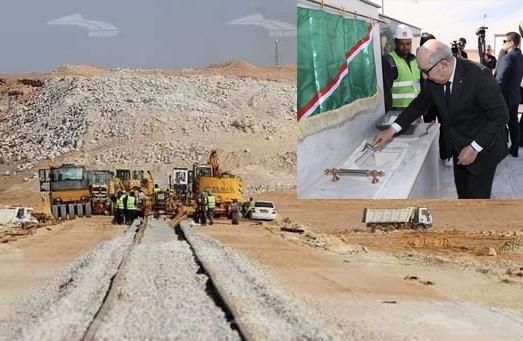
Image: El Mawkie
Takeaway
Algeria's mining sector development presents opportunities for international investors, particularly in partnership with state-owned entities. Law No. 25-12 allows foreign ownership of up to 80% of mining projects, streamlining the permitting process. Investors should closely monitor the progress of key projects like Gara Djebilet, the Integrated Phosphate Project, and Tala Hamza, as well as infrastructure developments, to assess potential returns and navigate the evolving regulatory landscape.
Algeria is prioritizing the development of its mining sector as a key pillar for economic diversification, initiating several large-scale projects across the country. These projects, spearheaded under President Abdelmadjid Tebboune's strategic vision, aim to reduce reliance on hydrocarbons and establish a more sustainable and diverse economy. The focus is on maximizing the value of natural resources through local processing and manufacturing, reducing imports, and boosting exports.
Historically, Algeria's economy has heavily depended on hydrocarbons, with the sector accounting for 14% of GDP and nearly half (47%) of budget revenues between 2019 and 2023. However, the government is actively pursuing diversification through the mining sector, which currently contributes less than 1% to the country's GDP. To achieve this, Algeria enacted the New Mining Law (Law No. 25-12) on August 3, 2025, to attract foreign investment by easing capital constraints and streamlining the permitting process. The law allows foreign investors to hold up to 80% ownership in mining projects, contingent upon partnerships with state-owned entities. This initiative aims to exploit the country's vast reserves of iron, phosphate, zinc, gold, and diamonds, of which only 10% is currently being utilized.
Key projects at the forefront of this mining renaissance include the Gara Djebilet iron ore mine in Tindouf, the Integrated Phosphate Project in the east, and the Tala Hamza-Oued Amizour zinc and lead mine in Béjaïa. The Gara Djebilet mine, holding an estimated 3.5 billion tons of iron ore reserves, is projected to produce 4 million tons per year initially, increasing to 12 million tons by 2030 and potentially reaching 50 million tons in the long term. The Integrated Phosphate Project, valued at $7 billion, includes the development of the Bled El Hadba mine and processing facilities in Oued Kébérit, targeting an annual production of 5.4 million tons of fertilizers. The Tala Hamza zinc and lead mine, a joint venture between Algeria and Australia, is expected to produce approximately 170,000 tons of zinc and 30,000 tons of lead annually, with total investment amounting to $471 million.
The development of these mining projects has significant implications for various stakeholders. The Gara Djebilet mine aims to supply the national steel industry, reducing raw material imports by an estimated $1.2 billion annually. The Integrated Phosphate Project seeks to achieve self-sufficiency in fertilizers and support new agricultural areas, potentially generating billions of dollars in revenue and creating tens of thousands of jobs. The Tala Hamza mine is expected to supply local industries and generate an exportable surplus, strengthening Algeria's position in African and Mediterranean markets.
Looking ahead, Algeria plans to map and evaluate its strategic mineral reserves by 2027 and launch at least five new industrial-scale mining projects by 2030. A national mining tender planned for 2025 prioritizes battery and energy transition minerals. The country is also investing in infrastructure, including upgrading over 5,000 km of transmission infrastructure by 2030 and deploying smart grids. Investors should monitor the progress of these projects, the implementation of the New Mining Law, and the development of related infrastructure to assess the opportunities and risks in Algeria's evolving mining sector.