Algeria Calls for Restraint as Middle East Conflict Threatens Global Gas Markets
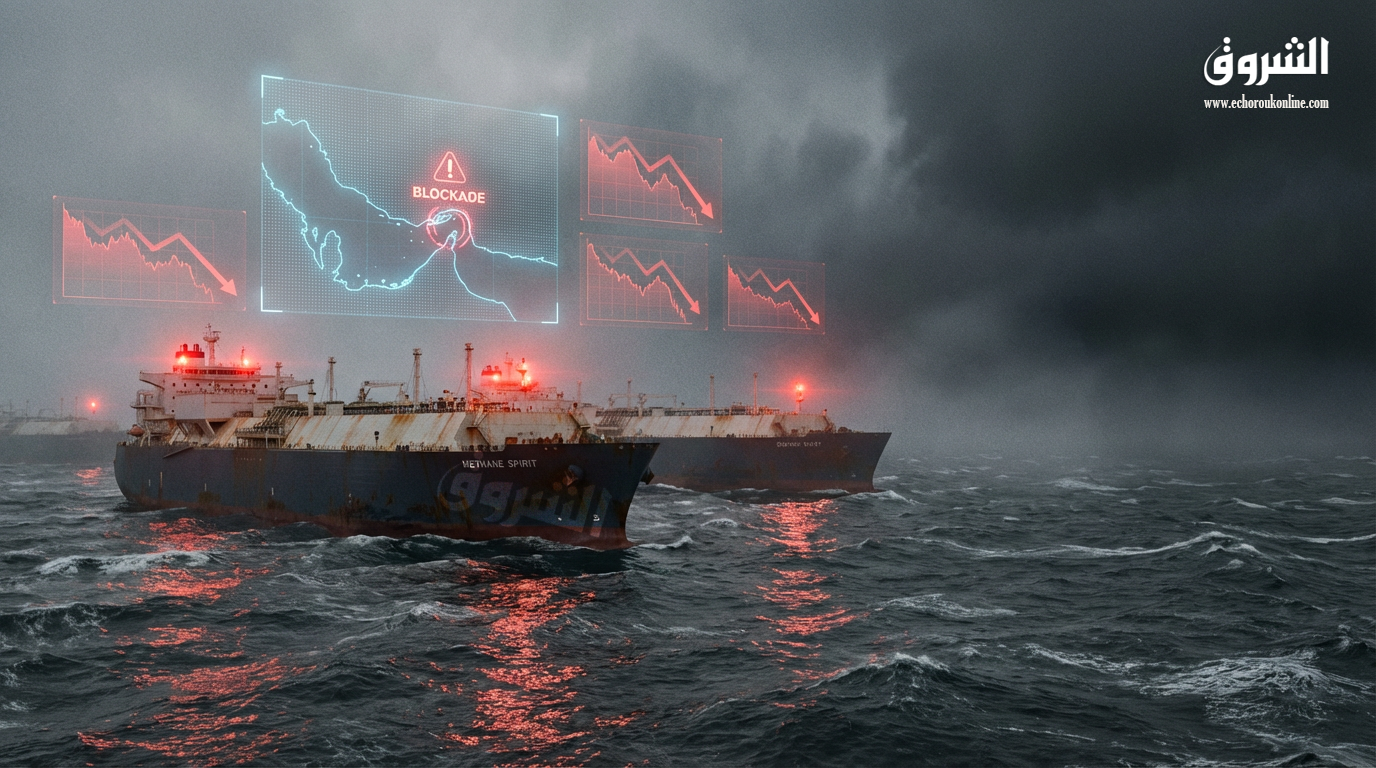
Image: Echorouk
Takeaway
The Middle East conflict presents both risks and opportunities for energy investors. Companies with diversified LNG supply chains will be better positioned to weather potential disruptions. Traders should monitor Brent crude and LNG prices closely, as well as shipping insurance rates in the Strait of Hormuz. Increased volatility is expected, creating opportunities for short-term gains but also requiring careful risk management.
Algeria is calling for "restraint" and "responsibility" amid escalating military tensions in the Middle East, following coordinated attacks by the United States and Israel against Iran on Saturday, February 28, 2026. The Algerian Ministry of Foreign Affairs issued a statement expressing "deep concern" over the military escalation in the Gulf region. In response to the escalating crisis, the Algerian Ministry of Foreign Affairs has established a crisis unit to monitor the situation of Algerian citizens abroad.
The renewed conflict, triggered by attacks on Iran, carries significant implications for global energy markets, potentially creating the largest disruption since Russia's invasion of Ukraine in 2022. The Strait of Hormuz, a critical chokepoint through which approximately 20% of global liquefied natural gas (LNG) exports pass, is now facing near-complete disruption. This disruption threatens a sharp rise in gas prices, particularly in Asia, as eleven LNG tankers linked to Qatar have already paused voyages to avoid the waterway. The United Nations Secretary-General António Guterres has condemned the escalation and warned that the use of force undermines international peace and security.
The potential disruption in LNG shipments through the Strait of Hormuz could have a cascading effect on global gas markets. Asian buyers, heavily reliant on Qatari LNG, are particularly vulnerable, with China importing almost a third of its LNG from Qatar. India is the second-largest importer. Turkey, which imports pipeline gas from Iran, may also be forced to increase LNG purchases, further driving up prices. The April Nymex natural gas futures contract settled at $2.859/MMBtu on Friday, February 27, while West Texas Intermediate (WTI) crude prices hovered around $67/bbl.
As a member of OPEC+, Algeria is closely monitoring the situation's impact on oil production and market stability. OPEC+ may consider increasing oil production to offset potential supply disruptions. Algeria's Energy Minister Mohamed Arkab previously affirmed Algeria's support for the group's decision to raise overall oil supply by 411,000 barrels per day starting in July 2025. In line with this decision, Algeria was set to increase its crude oil production by 8,000 barrels per day. In August 2025, Algeria announced it would increase its oil production by 11,000 barrels per day in September 2025. In January 2026, Algeria's crude oil production was 0.96 million barrels per day.
The international community, including the European Union, is convening emergency meetings to address the escalating situation. The EU foreign ministers are scheduled to hold an emergency video conference to discuss the events. The UN Security Council is also holding an emergency meeting to discuss the repercussions of the attacks on Iran. The next meeting of OPEC+ is scheduled for June 7, 2026. The situation remains highly volatile, and the potential for further escalation poses a significant risk to regional and global stability.